
Relatability and Ruin in the Photography of Gabrielle Garcia Steib
By Mario Rodriguez
March 31, 2026
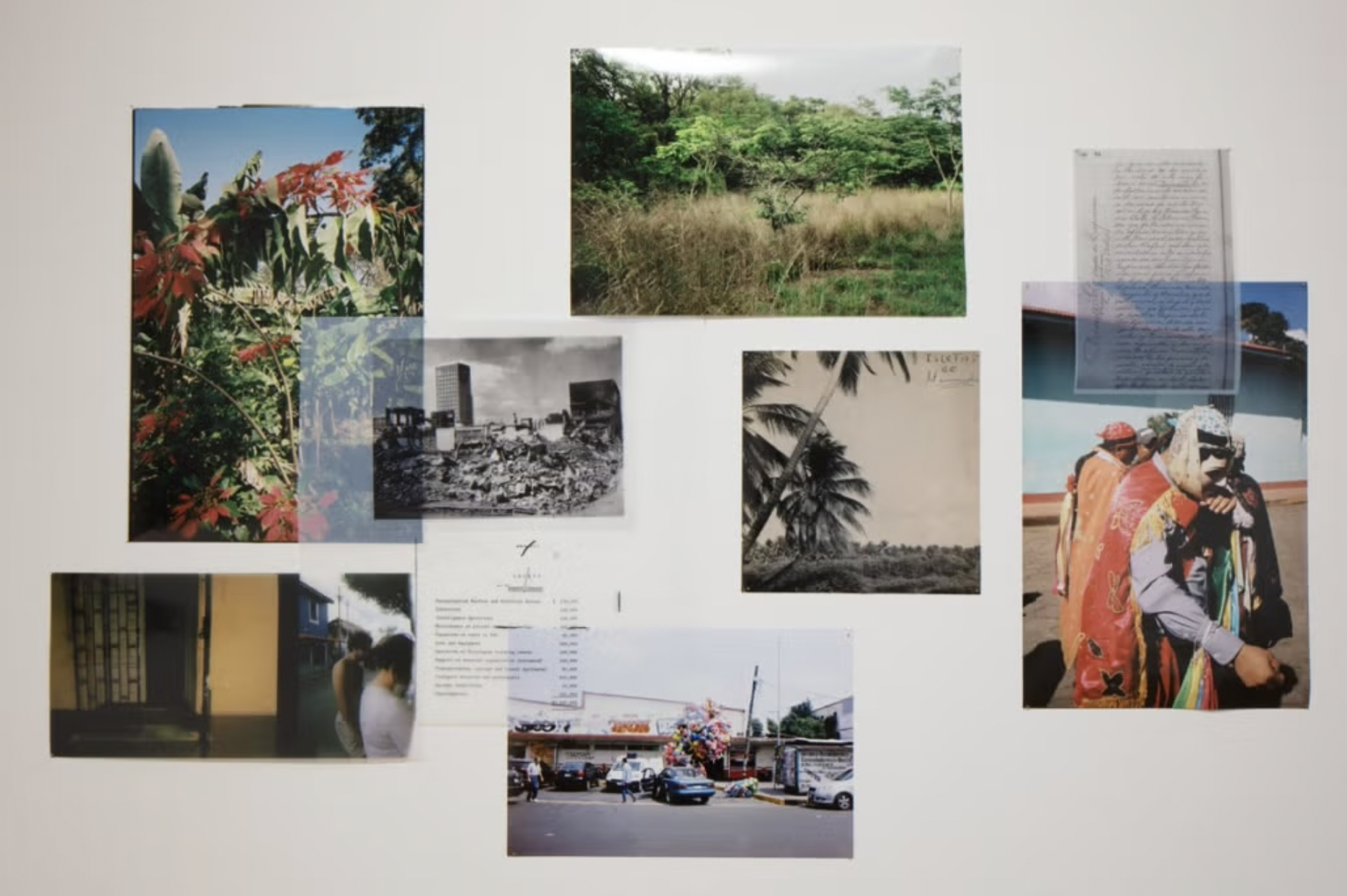
Gabrielle Garcia Steib, Installation of Nueva Orleans es La Frontera Espiritual con El Caribe (New Orleans is the Spiritual Border to the Caribbean), 2025, C-prints on mylar, dimensions variable. Image by Jeffery Johnston and courtesy of Newcomb Art Museum of Tulane University and the artist.
Gabrielle Garcia Steib is a lens-based artist with deep roots in Louisiana, Mexico, and Nicaragua. Her art explores lines of connection between her ancestors and exposes the permeability of post-colonial, national borders that divide the American South, Latin American, and Caribbean territories’ related histories. Steib recently had work in two group exhibitions: Newcomb Art Museum’s Poetic Gaps: Opacity in the Photographic Imprint and New Photography 2025, Lines of Belonging at MoMA. In both cases, Steib presented installations that combined photos she has taken herself alongside archival documents.
When I saw Steib’s work at Newcomb—a photographic collage titled Nueva Orleans es La Frontera Espiritual con El Caribe (2025)—I was immediately struck by its familiarity. There is a certain elusiveness in the imagery, from the opacity of the light, to the erosion of the buildings and the vibrant plant life, which gives these works a universality that can appear like home to anyone along the Gulf of Mexico and the Caribbean Sea. Her work is a reminder that the land itself exists beyond nationhood and legality.
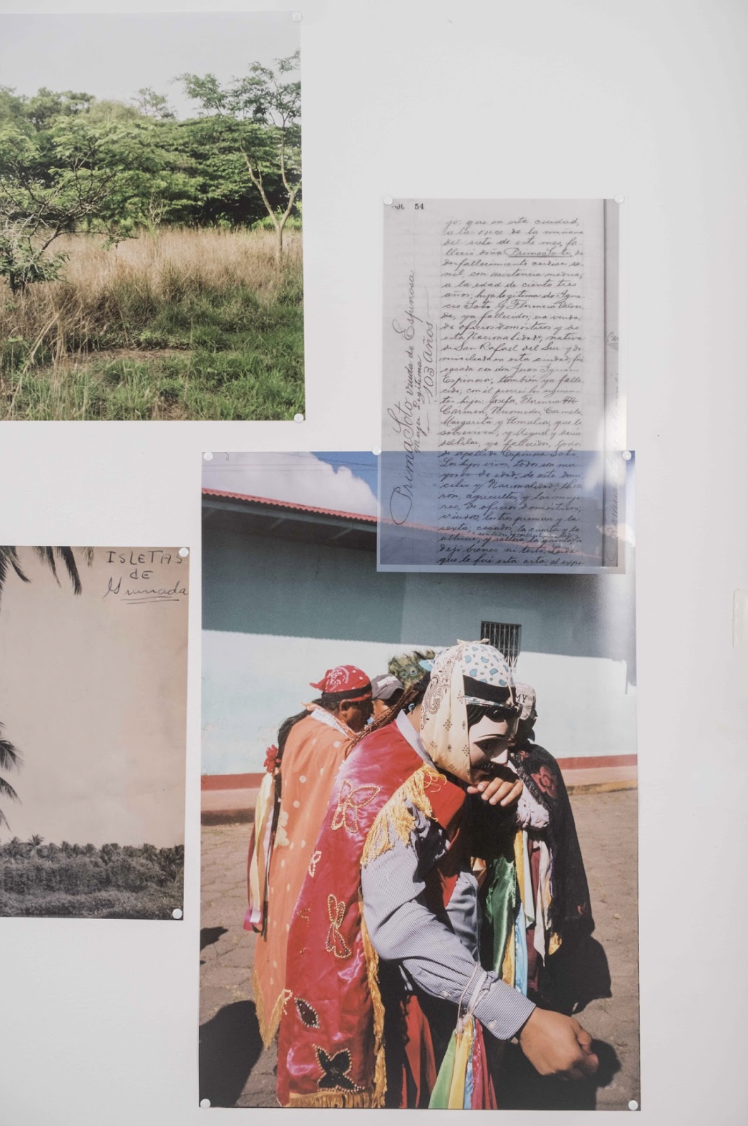
Gabrielle Garcia Steib, detail image of Nueva Orleans es La Frontera Espiritual con El Caribe(New Orleans is the Spiritual Border to the Caribbean), 2025, C-prints on mylar, dimensions variable. Image courtesy of the artist.
Steib recounts the story of her own family's migration to New Orleans and includes a photocopy of the death certificate of Prima Soto de Espinosa (Steib’s great great great grandmother), grounding this story in real humanity. The regionalism presented in this work is not amorphous or theoretical; it is based on real people whose lives brought them from one coast to another thanks to opportunity, and oftentimes, strife.
Steib also creates work as a way to reinvigorate ancestral memory, often pulling from her own family archives to reclaim forgotten histories of interconnected immigration. In elaborating on her family’s relationship to immigration and documentation, Steib stated,
“My great-grandfather was a writer and professor and was publicly against the then-dictator Somoza. Eventually, the government gave him the option to leave or go to jail. The government took their land and assets in Nicaragua, and they migrated to New Orleans with very little belongings. But one thing they did do was document everything, especially their time in New Orleans and the cultural gatherings. These gatherings, these parallels were fascinating to me. They photographed ‘fiestas patronales’ in their hometown in Nicaragua, and then later Mardi Gras in New Orleans, they photographed lush, tropical landscapes in Nicaragua, and the same in New Orleans.”
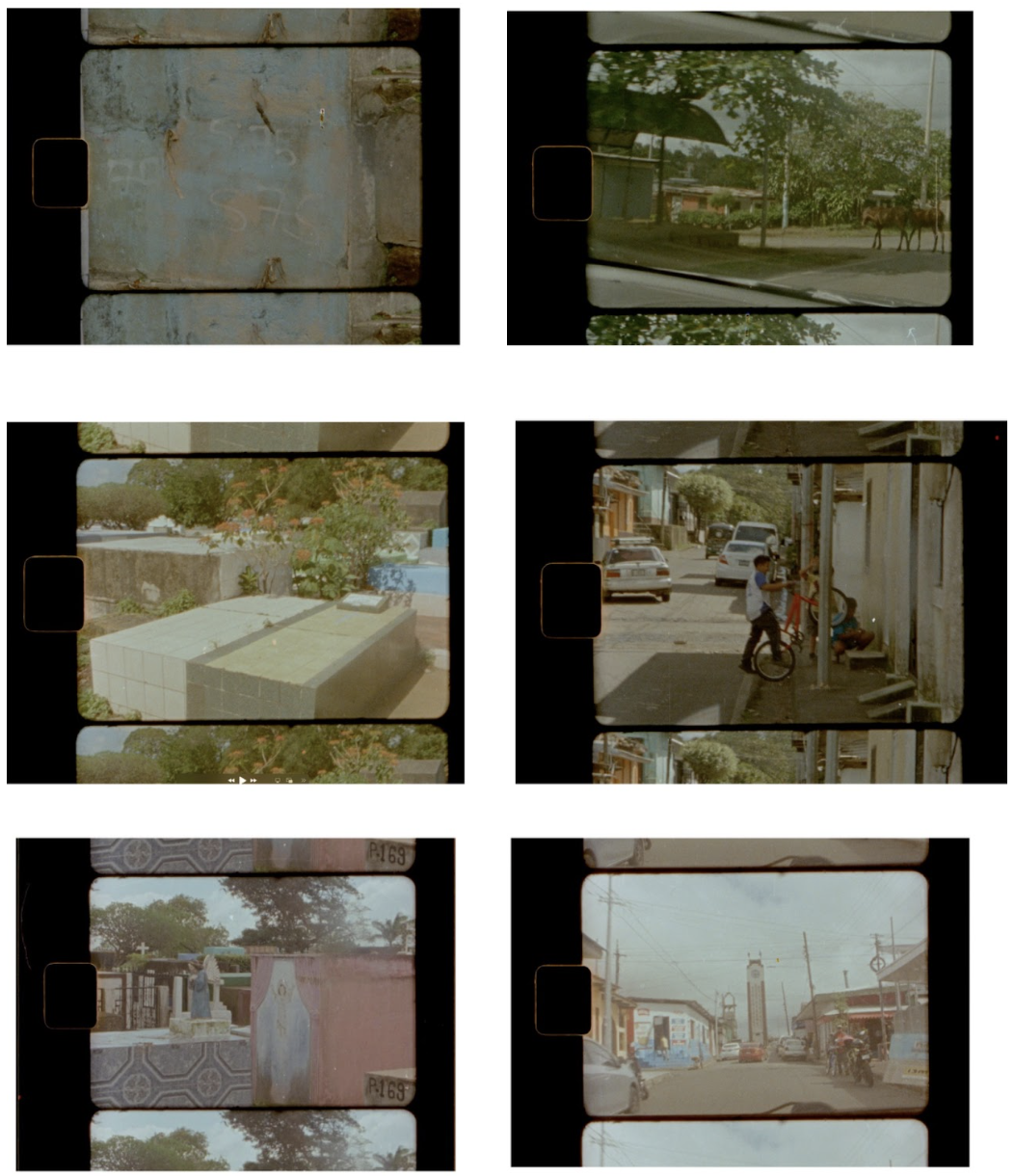
Gabrielle Garcia Steib, The probability of returning to the origin, work in progress, super 8 film, dimensions variable. Image courtesy of the artist.
Generational migration is not exclusive to her family; it reverberates through the Americas thanks to American Imperialism. Unlike Steib, many of these people do not have the same access to the material legacies of their ancestors to remind themselves of who they are. They often rely on oral histories and their own research to put the pieces back together, if they can. In proliferating and building upon her own inherited archive, Steib dually maintains a family tradition and creates a legacy with which we can all feel attachment.
The installation of Steib’s work for New Photography 2025, Lines of Belonging, featured two images installed from floor to ceiling like wallpaper, the left of which included a loop of additional images with a video projector. Steib’s use of space and varied imagery creates the impression that the subjects are being reanimated in order to speak to one another. The artist shares: “The installations that I imagine, especially with exhibitions in New Orleans, are very collage-oriented. I am piecing together images in a way that literally feels like connecting the dots, connecting photographs I've taken with archival materials.” The resulting work communicates a narrative that transcends what a single image could say on its own.
Anyone who lives far enough south knows how the environment finds its way into everything, especially in cities built on swampland like New Orleans, Miami, or Mexico City. Foundations shift, walls crumble, and water seeps in. After the devastation of Hurricane Katrina, many of the images held in family homes throughout the city were destroyed. Steib hopes to reimagine these lost images, occasionally even including damaged photos in her installations.
So many immigrants from Latin America and the Caribbean find themselves in cities like New Orleans or Miami out of necessity. This was the case with the Central American immigrants who came to Louisiana as construction workers in terrible, post-Katrina working conditions, and many of these people stayed to make New Orleans home. Artwork like Steib’s shows us how foreigners coming to the city are not altogether so foreign, with ancestry that somehow weaves many different nationalities within one larger geographic landscape. Many cities in the Gulf were sites of trade and exchange well before colonial conquest. Thanks to the desperately challenging circumstances some people find themselves in, migratory flow continues despite government efforts to intervene with violence. The artist writes:
“I think it is definitely postcolonial. Recovering history (whether that be from archives, my films, or photography) and seeing how history has shaped where we are today, making these connections with the past and present is postcolonial. The colonial / capitalist aftermath of Katrina, the degradation of the Gulf Coast, the U.S. intervention in Nicaragua, everything feels like it is connected. What is left for me is landscape and memory, and I use whatever tools I have to unpack that.”
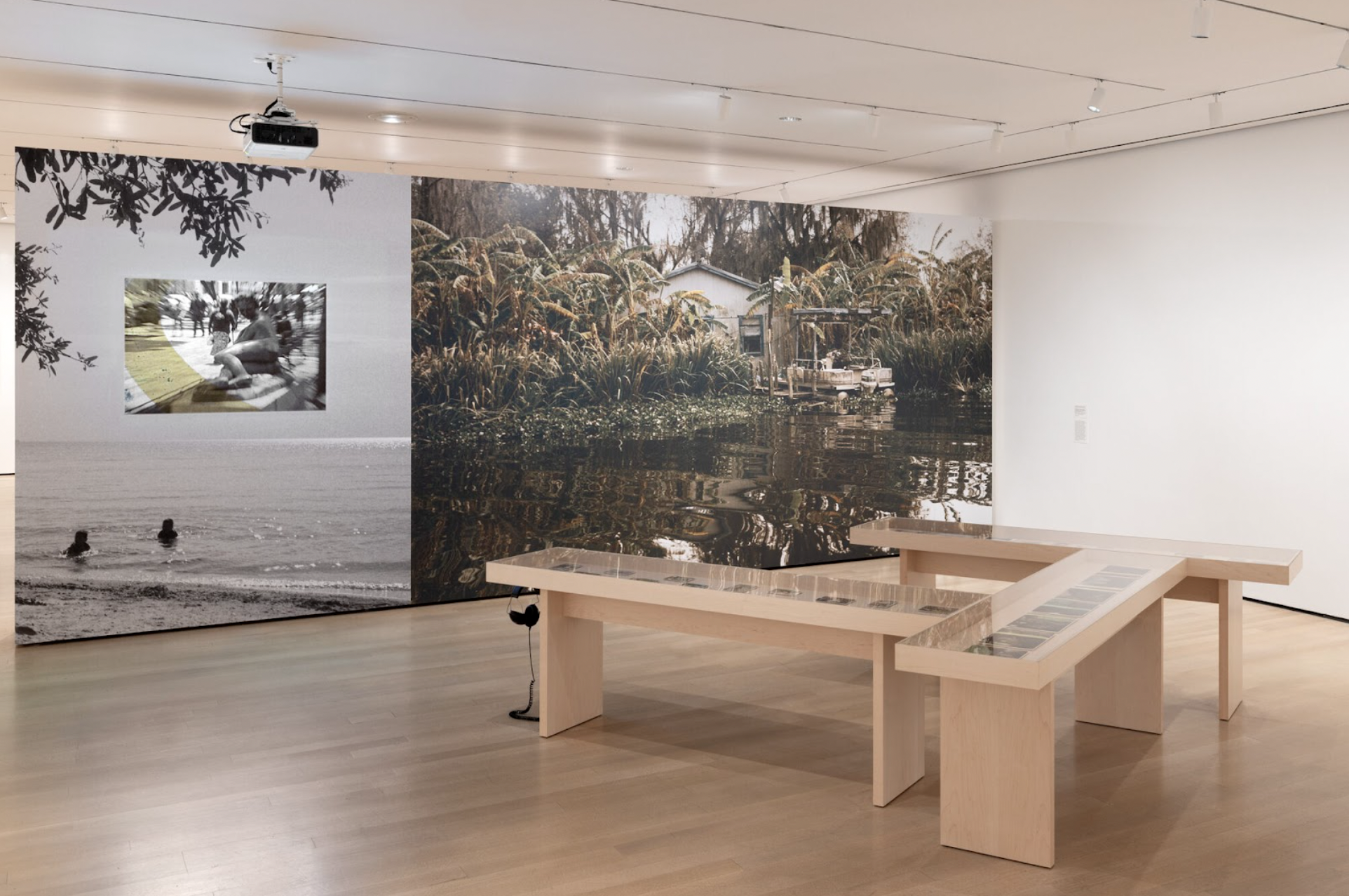
Gabrielle Garcia Steib, Nueva Orleans es la Frontera Espiritual con El Caribe (New Orleans is the Spiritual Border to the Caribbean), 2020-2025, Installation with video (color, sound), photographic vinyl wallpaper, and fifty archival photographs, Video: 3 min., 19 sec., dimensions variable. Image by Robert Gerhardt and courtesy of The Museum of Modern Art and the artist.