
L. Kasimu Harris Helps to Preserve New Orleans Black Culture
By Quinn Foster
March 31, 2026
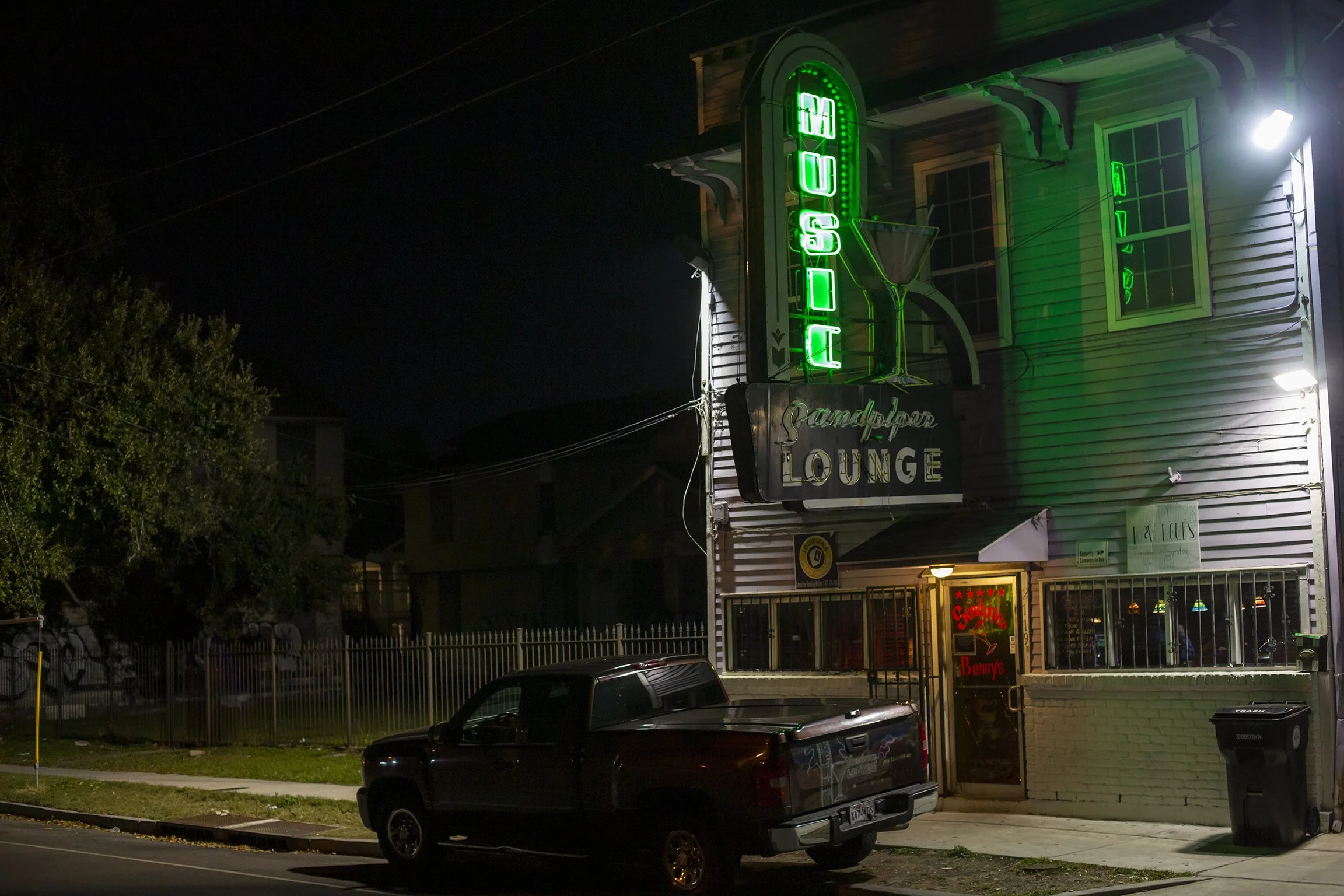
L. Kasimu Harris, Baby, Let Me Hold Your Hand (Benny’s Sandpiper Lounge), New Orleans, 2019. Image courtesy of the artist.
In 2025, L. Kasimu Harris made history as the first Black, New Orleans-based photographer with artwork added to the Museum of Modern Art (MoMA) in New York’s permanent collection. His inspiration stems from music and literary arts. “Jazz in particular, Black American music has always tugged at my soul…I grew up partly in the Seventh Ward of New Orleans and partly in the Sixth Ward of New Orleans, and that’s where I was introduced to Black Masking Indians and Social Aid and Pleasure Clubs,” shared the artist.
Harris’s mother owned a floral shop on Broad and Ursuline, and he vividly remembers her closing the shop and allowing him to play his trumpet with the Second Line bands. Rooted in Black culture and community, his photography and videography exude Southern Blackness, social justice, and the possibilities of a better tomorrow.
Afro-Indigenous-centered spaces like the First and Last Stop Bar Lounge, a neighborhood bar in the Seventh Ward, have been safe havens for Black Masking Indians and community members but face erasure due to gentrification and racial capitalism. The Vanishing Black Bars and Lounges photo series examines the important visuals, lifestyle, and culture of Black bars and lounges in and beyond New Orleans.
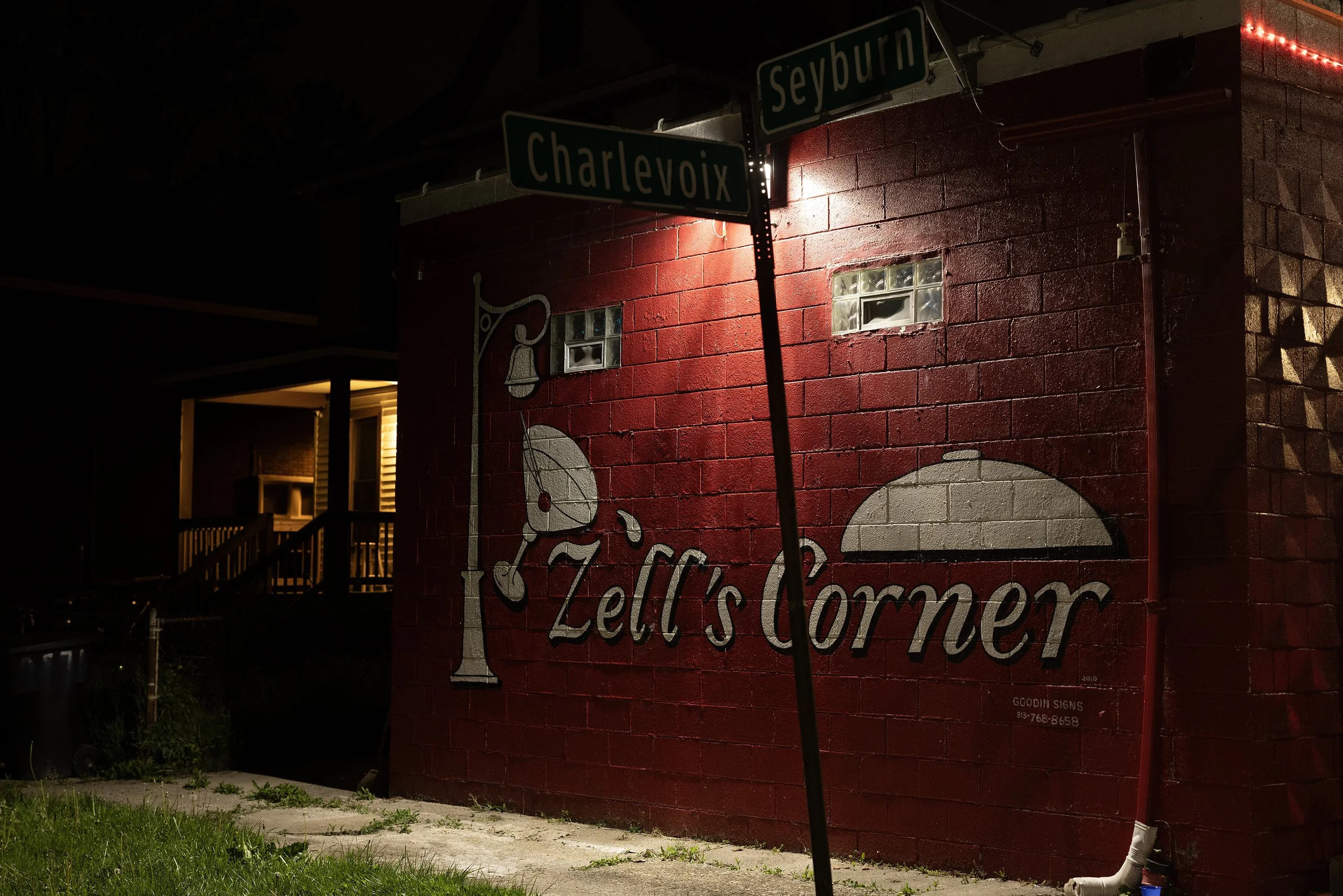
L. Kasimu Harris, The East Side Phoenix, Zell’s Corner, Detroit, 2025. Image courtesy of the artist.
“New Orleans is a culture that is marketed globally but is not invested in with the same intentionality. You have Black Masking Indians who may struggle to buy supplies for the beading, and the feathers and all those things are very expensive,” Harris said. His piece, From Silky’s to Sportsman’s Corner, and the Streets in Between Harry G on St. Joseph’s Night, shows vibrant red, gold, and silver beadwork, stitches, and storytelling on Harry G.’s regalia. Surrounded by community members, the Black Masking Indians are pillars in New Orleans’s Black culture.
The Vanishing Black Bars and Lounges series shows viewers what once was, what is, and what could be with memorabilia, active culture bearing, and regular everyday living. Within Harris’s collection of images, there are several reconstructed advertising ephemera photos from Black social spaces. “The language is steeped in the tradition of Anansi, a West African trickster god, where the fashionable images lure viewers into the deeper and foreboding messages of gentrification and cultural loss,” shares the artist. In his non-commercial photography practice, Harris captures Black expressions, sentiments, actions, and lifestyles. Ultimately, his artwork shouts resiliency and remembrance rising from the concrete, saying, “We’re still here and we ain’t going anywhere!”
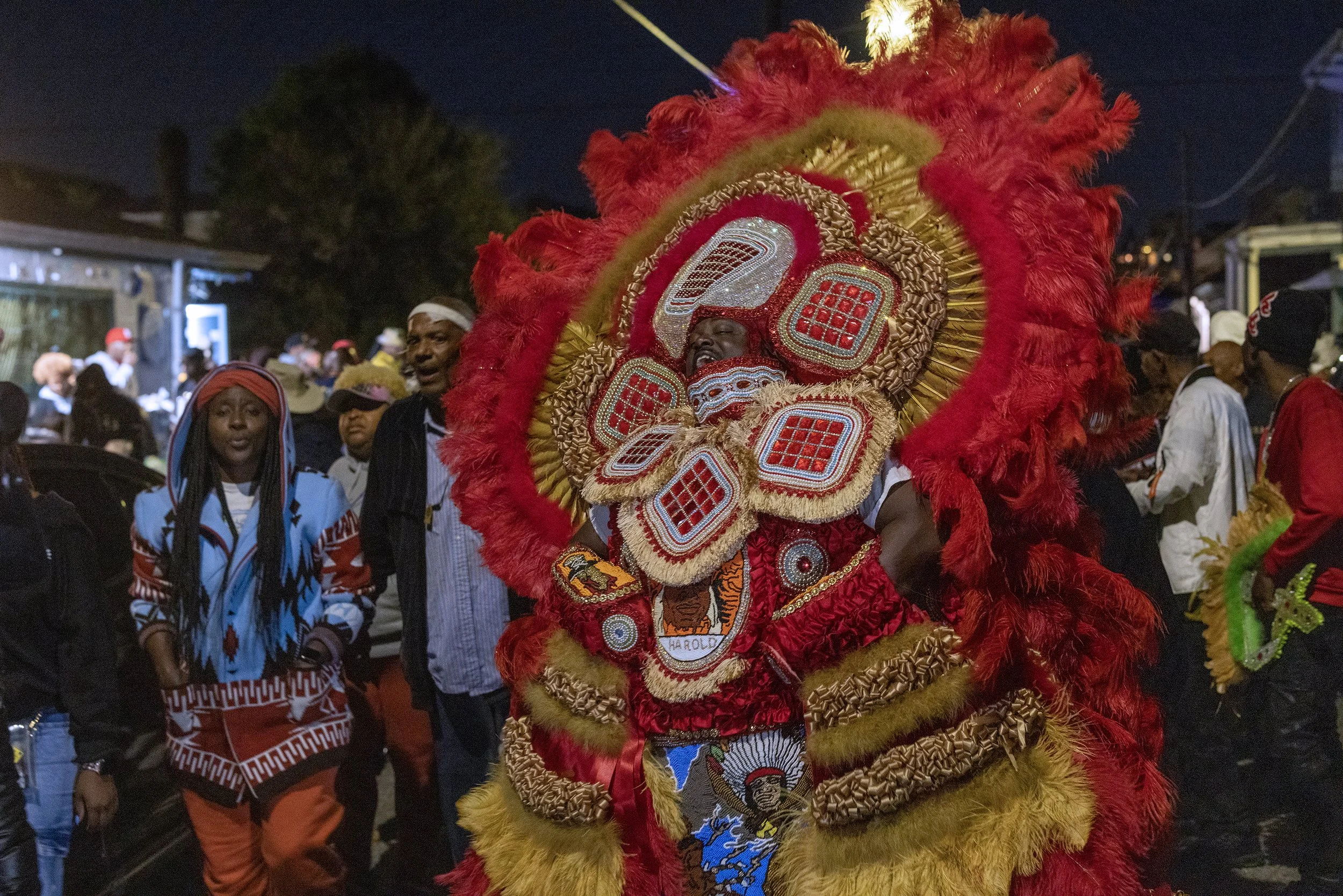
L. Kasimu Harris, From Silky’s to Sportsman’s Corner, and the Streets in Between Harry G on St. Joseph’s Night, 2024. Image courtesy of the artist.
In his short film, A Blackness Continuum, Harris explores the racial killings of Black men from the timeline of 1955-2015. The film was displayed at the Warehouse Gallery in Brooklyn, New York as part of an exhibition curated by Kamau Ware. Heart-wrenching and infuriating, Harris’s film embodies the trauma Black people in America deal with daily. In a similar vein, a photo showing a wall of obituaries extends the importance of life and death in the city.
He is inspired and fascinated by the challenges and creativity of Black New Orleanians. “I think oftentimes I feel strongly we have this unrealized, unrecognized Black genius… A lot of people look at bars as just a place for watering holes. But let's take New Orleans and beyond. First of all, it was and remains a safe space. Before desegregation, you couldn't just go anywhere and get a drink,” he said.
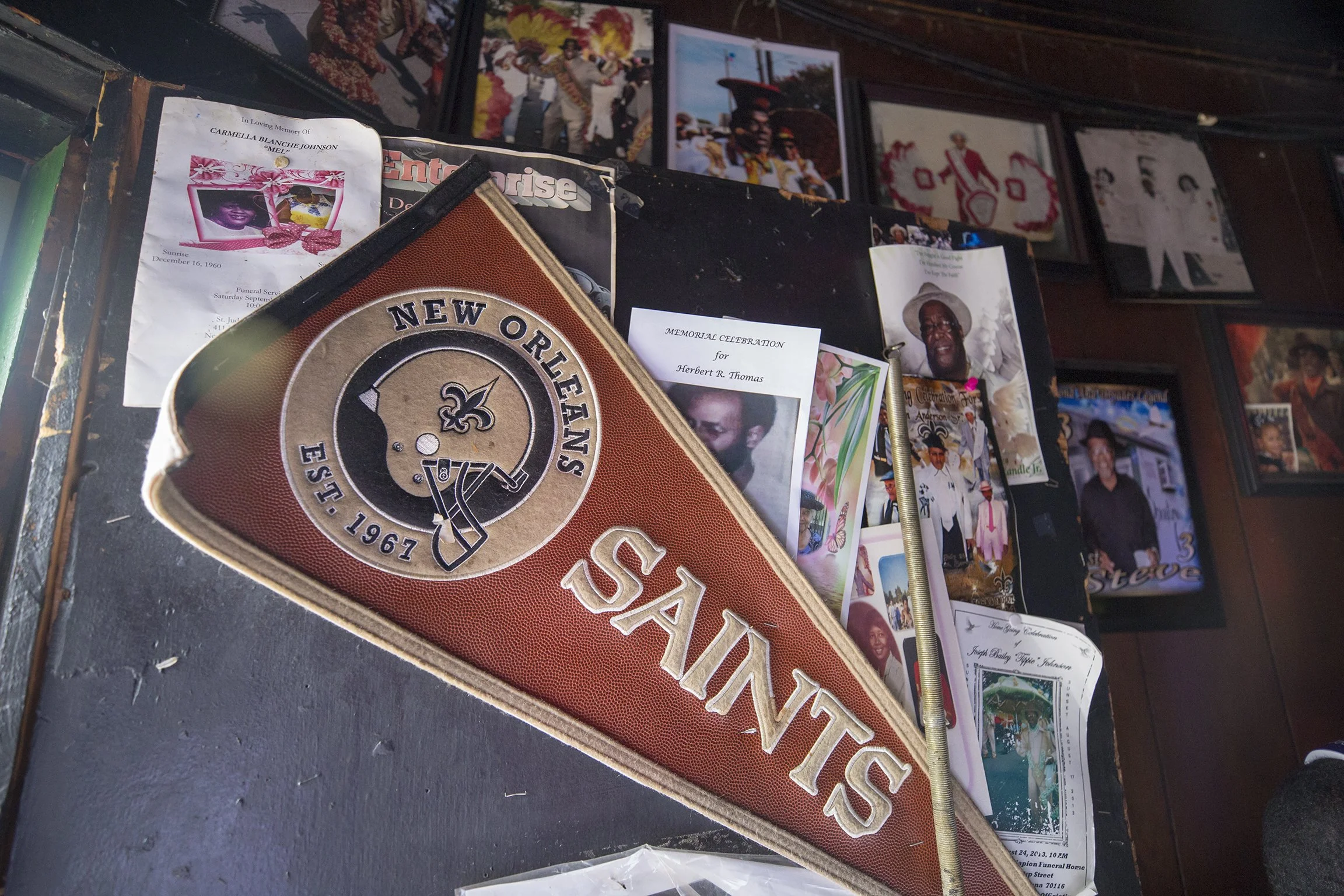
L. Kasimu Harris, Saints & Patrons (Sportsman's Corner Bar), New Orleans, 2018. Image courtesy of the artist.
Another reason Harris began to document Black New Orleans culture was that he noticed that only a few Black documentarians were capturing these stories. He was not a fan of outsiders benefiting from the culture without investing back into it. Harris’s art catalog reminds viewers that all facets of Black life should be acknowledged, cherished, uplifted, and valued.
When Barack Obama became president in 2008, Black communities across the nation felt a sense of joy, pride, and relief. Harris’s Dreams Do Come True photo series speaks to this era of promises, hopefulness, and a “yes we can” mentality. Black children saw a Black man serve in the White House at the highest level of government. Obama’s presidency inspired younger and older generations. In one image, Harris displays three young Black children sitting at a bus stop in professional work attire. One holds a trumpet and a briefcase; the second child is reading a magazine; the third child is reading a newspaper with a briefcase. This image illustrates that Black children can aspire for greatness on their own terms. “This moment in my artistic practice is fulfilling for me, and I think it's important to share my story as I share other stories because I want that little boy, or little girl, or a big person to see what I've done,” he said.
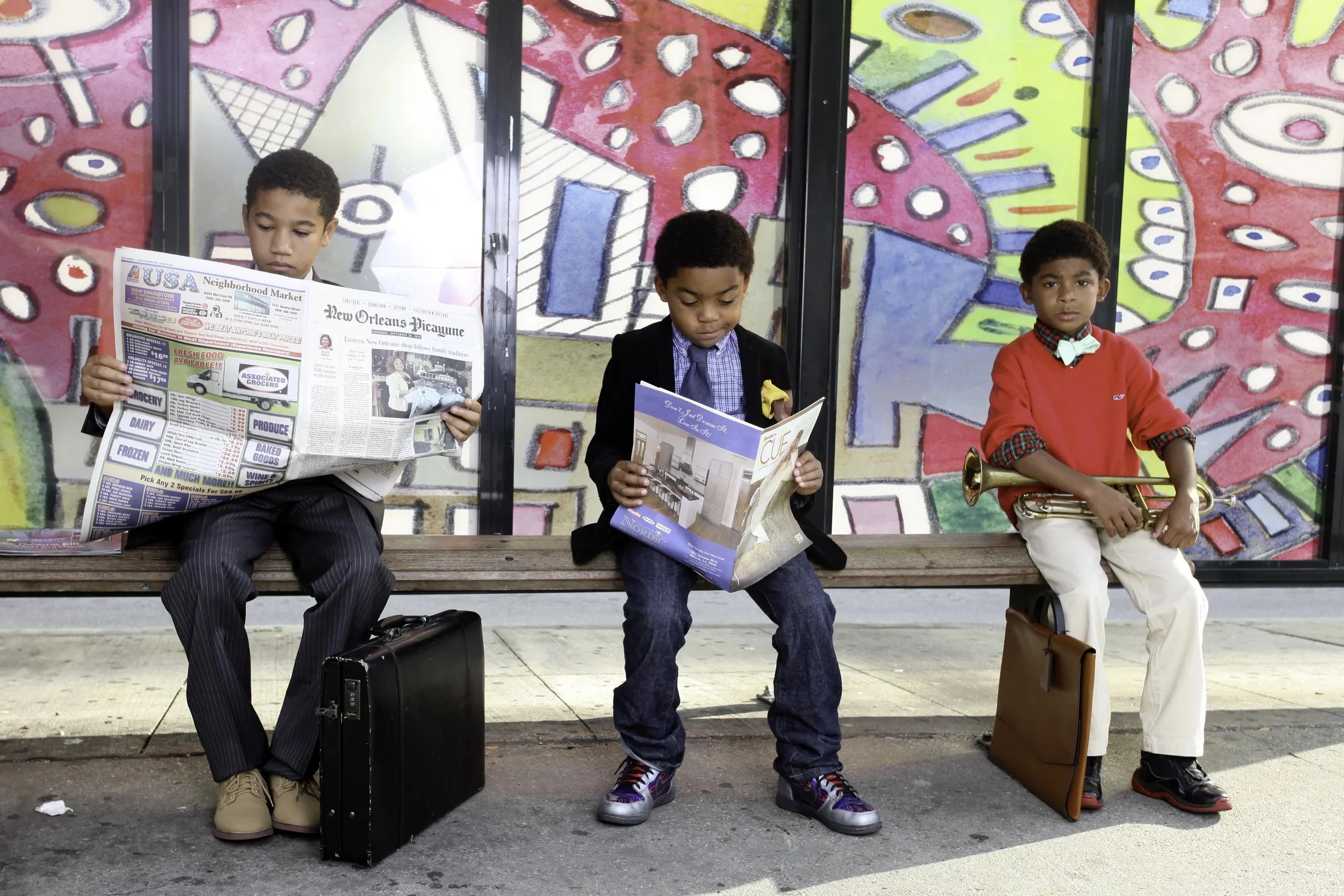
L. Kasimu Harris, Don't Just Dream It, 2012. Image courtesy of the artist.