
Enter>>> Eco-Feminist Signals at the Parlour Gallery
By Lara Schaberg
November 26, 2025
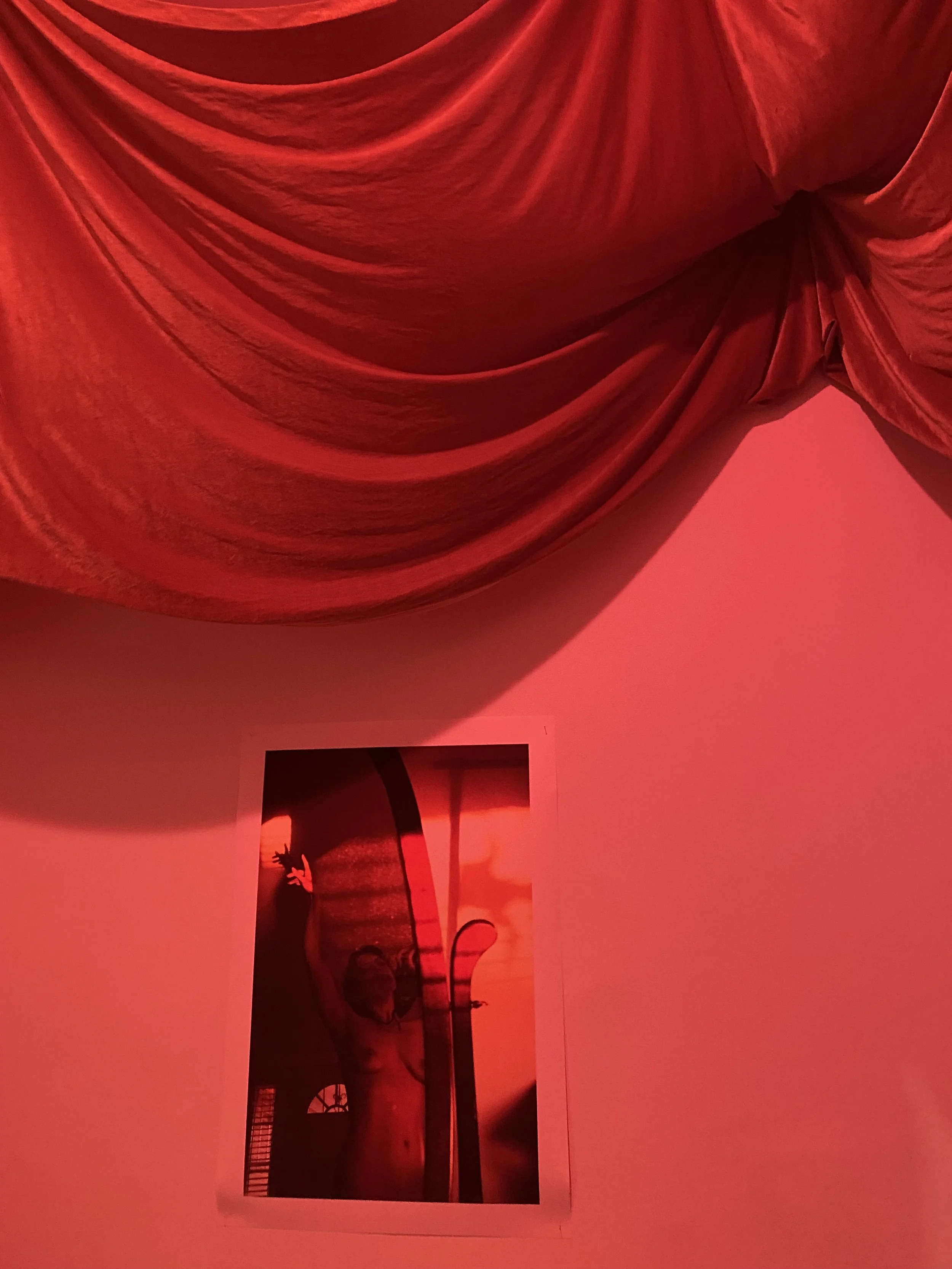
Installation view of LoverMother, Robyn LeRoy-Evans, LoverMother X, 2025, raw silk and archival pigment print. Photograph by Lara Schaberg.
The Parlour Gallery in New Orleans unfolds as a landscape, soundscape, and bodyscape of emotion in technicolor. Two artists have work on view through November 29, Robyn LeRoy-Evans, with LoverMother, and Lizz Freeman, with Semaphore. The installations call for a multidimensional understanding of embodiment. In the transitional space of LoverMother, I enter a rose-colored room with lighting reminiscent of a Matisse painting. The edges and borders begin to blur. A pulsing soundscape enmeshes with a single photograph, pushing the eye up toward the warmth of red silk.
Beneath and between the folds lie the fragments of her story…
The body’s reflection in a mirror longs for something tangible from within. Above, the sculptural, smooth silk swells, blooming into the shape of a flower.
This electric longing…
The poem’s sonic landscape reverberates through the space, and I am aware of an embodied presence and decelerated time flow.
Always now this longing lingers…
Sometimes she is contained, proper, untouchable…
Other times she bleeds out from the edges, messy and vivid and warm…
Here, in the searching presence of LeRoy-Evans’s work, I inhabit two identities at once—the erotic and the nurturing. Turned inside out, the space becomes an emotional landscape of soft futures. An interior mapping unfurls and invites an ecology of compassion, awareness, and biophilia.
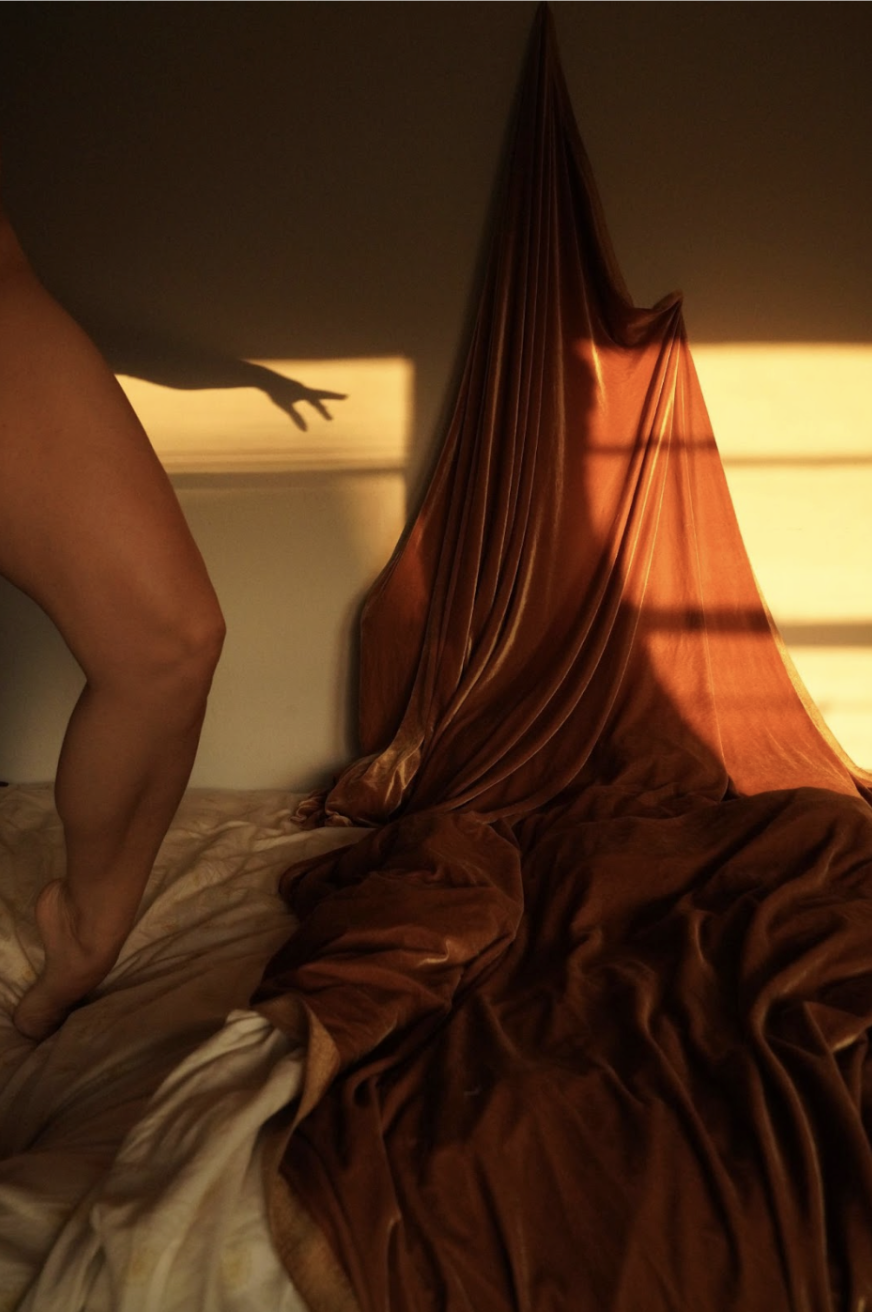
Robyn LeRoy-Evans, LoverMother XVII, 2025, archival pigment print, edition of 5, 20 x 20 inches. Image courtesy of the artist and Parlour Gallery.
LeRoy-Evans’s practice draws from mythology, history, and motherhood, often syncing with her collaborative practice. She is also an artist in the feminist art quartet the Crystal Efemmes, a group that addresses intersectional feminism, mysticism, body politics, and ecosystemic care. Their work pulls the collective through a communal and ecological matrix. A sensual and raw feminine power refuses to be contained and recalibrates a vivid multidimensionality.
Using self-portraiture, the woman gazes upon herself—disrupting inherited ways of seeing. In the dance between installation and photography, LeRoy-Evans provokes an inner awareness while looking unapologetically at the complexities of motherhood and how it informs the body. Photos of her child appear throughout the next room and invite a dialogue between mother and daughter. This is a practice that explores personal memory, care, and the body’s rough edges and soft insides. Velvet corners and interstices surround these images, inviting touch and an opportunity to linger. LeRoy-Evans has been creating these emotional landscapes for over two years, and vulnerability echoes through the work.
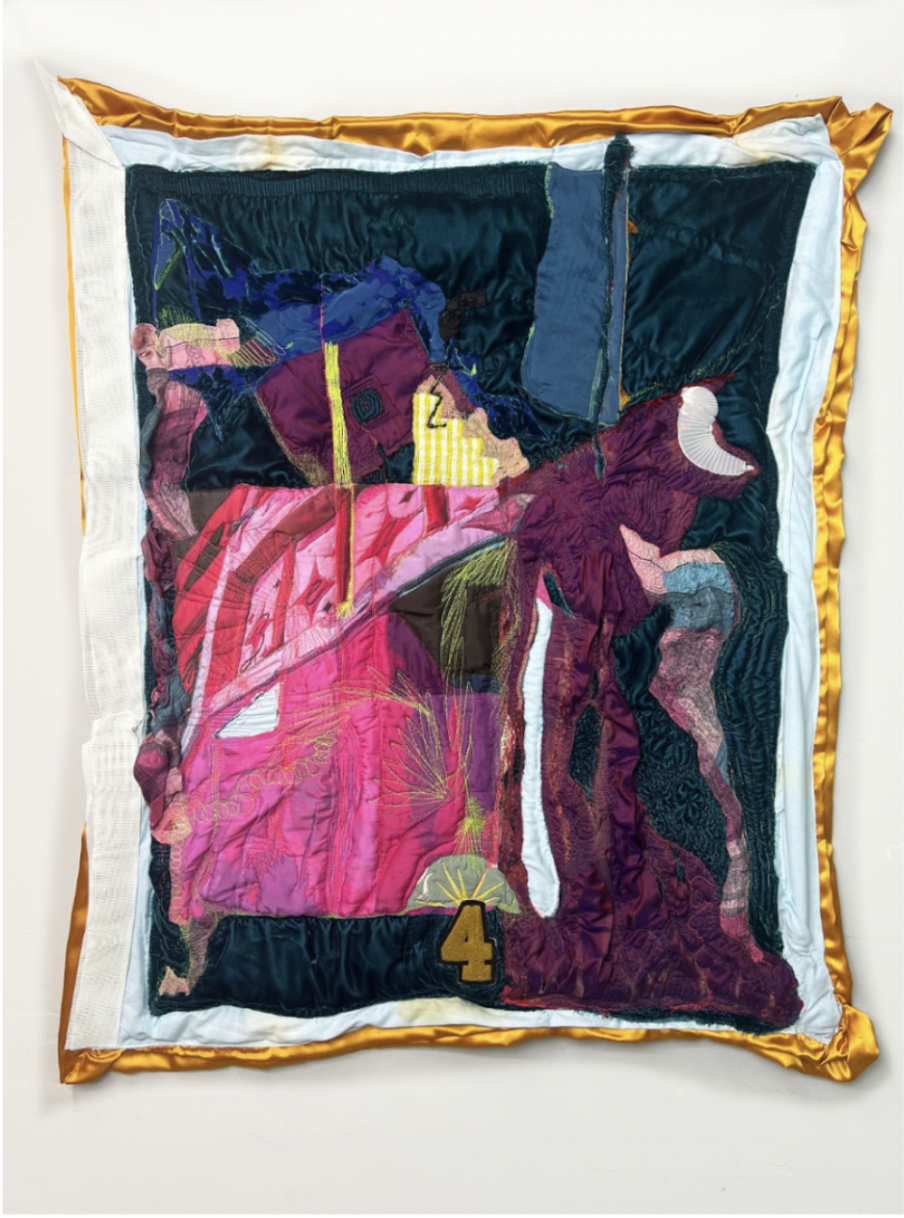
Lizz Freeman, In the Thick of It, 2025, photo and textile collage, 35 x 40 inches. Photograph by Lara Schaberg.
This multidimensionality carries through Lizz Freeman’s exhibition, Semaphore, which sends out surrealist signals transmitted over distance and time. Her frame-defying canvases fill the space in unexpected ways with unconventional forms from found patterns, fragments of mass culture. The work becomes sculptural in the way it refuses to stay flat and two-dimensional, in the way it utilizes an unraveling structure.
In Freeman’s Plug Embroidery, covering the actual circuitry of the electrical outlet is part of the art. Form resists function. Throughout Semaphore, physical traces and threads of life intersect in these surrealist records of memory. Freeman uses photography, textile, collage, as well as free motion embroidery, to construct and deconstruct imagery. In this era of hyperspeed, I find myself decelerating.
A pause.
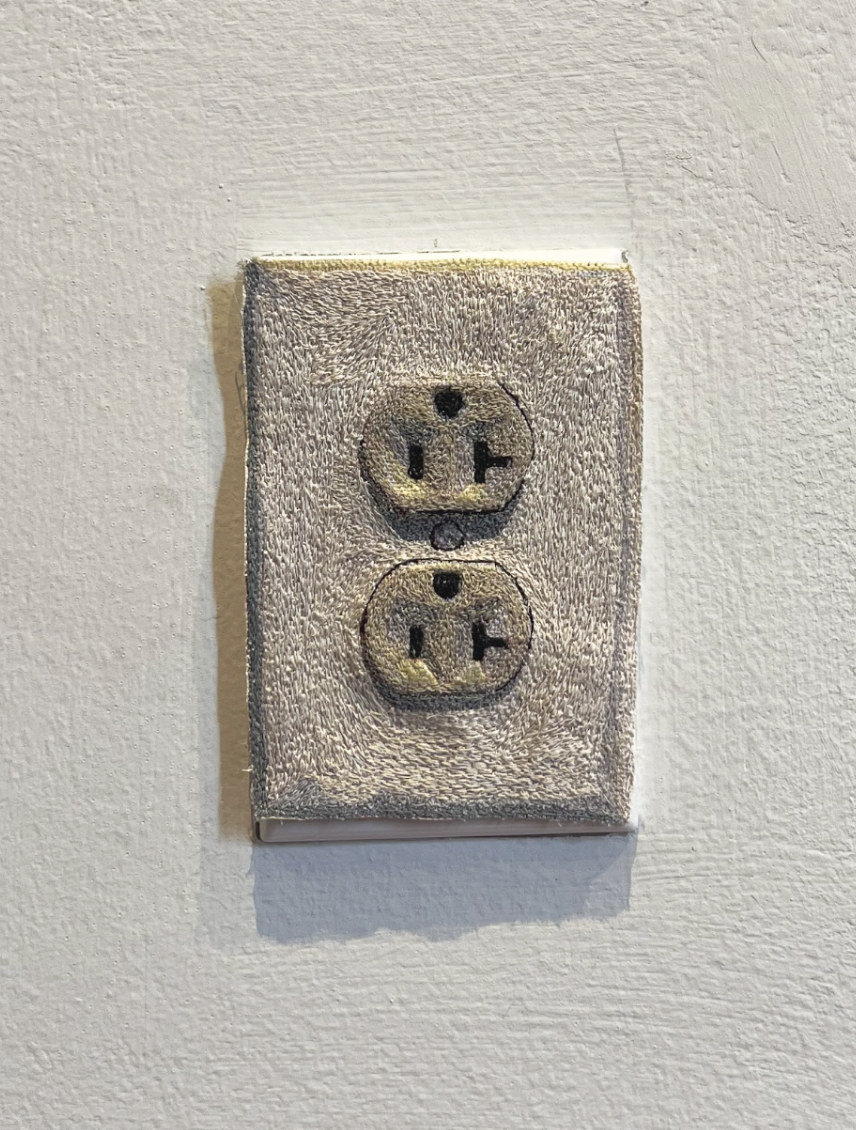
Lizz Freeman, Plug Embroidery, 2025, thread. Photograph by Lara Schaberg.
The pieces are made with sustainability in mind, by sourcing salvaged fibers. “While we readily consume and discard items without a second thought, there is already enough clothing on the planet for the next six generations,” writes Freeman. In this way, her process takes the form of ecological and embodied repair.
In another riveting textile collage titled Retreat to the Attic, Freeman addresses climate change. The piece refers to the life-raft ready, for the always imminent flooding in New Orleans. The tetris layering of textiles feels like hand-made computer graphics. A figure of a woman hovers in an almost holographic interstitial space formed by waves of iridescent fabric. Her body lives in a floating world, inhabiting an alternative temporality.
Freeman’s and LeRoy-Evans’s works expose contradictions, open a dialogue with the machine, show the seams, and ask what would it look like beyond the confines of contemporary life. Who will we be after this rupture? It is a political practice. Art historian Tom McDonough writes, “The artwork wasn’t a mere window through which to look onto a distant ‘dreamworld.’ It was more like a revolving door one was invited to walk through. [They] desired a world in which individuals could live poetry, not just read it. [...] The centenary of surrealism is a reminder of the movement’s unfinished business of revolutionary seduction.” These two artists follow the threads of this radical revolution.
After the opening, people pause in the streets, touch screens, tell stories, and hold hands. Wires and street lights hum above me; a palm points to the moon.
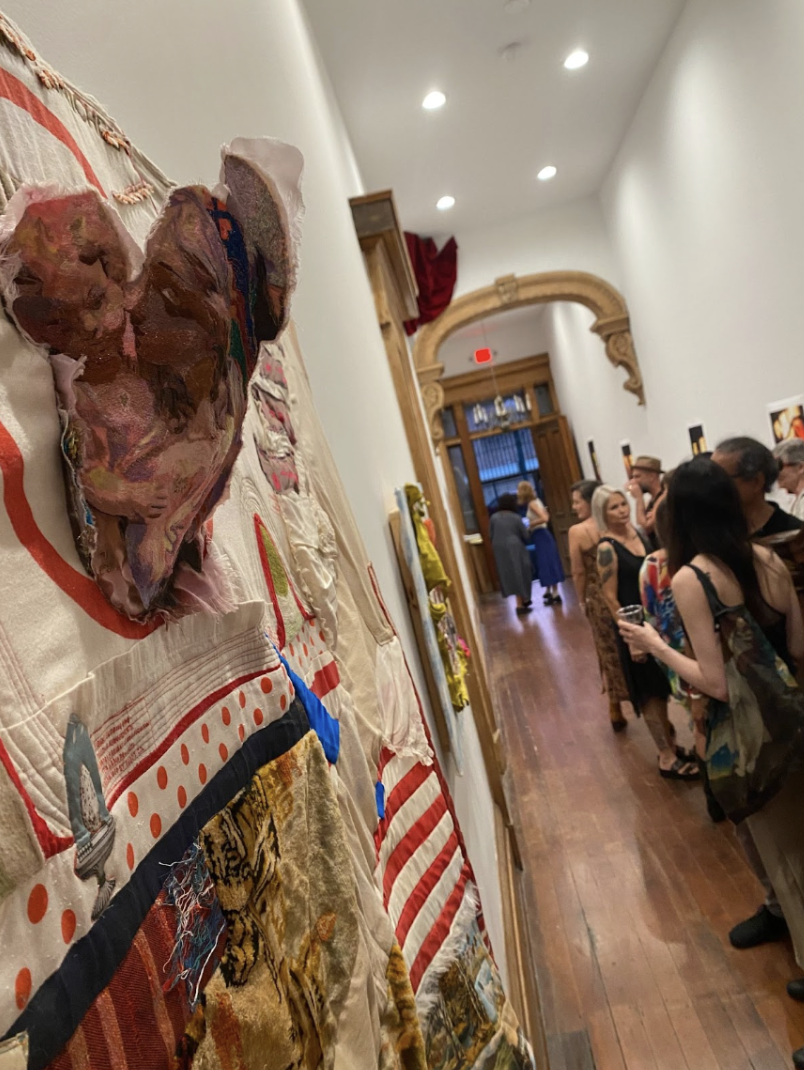
Installation view of LoverMother and Semaphore with work by Robyn LeRoy-Evans and Lizz Freeman. Photograph by Lara Schaberg.
See LoverMother and Semaphore at The Parlour Gallery through November 29, 2025. 822 Camp St, New Orleans, LA 70130.
Bibliography:
Tom McDonough, “Surrealism is better known for its strangeness than the radical politics and revolutionary ambitions of its creators”, The Conversation, October 23, 2025.