
Aaron Collier and the Shape of What is Hidden
By Sophia Isabel Greeson
October 8, 2026
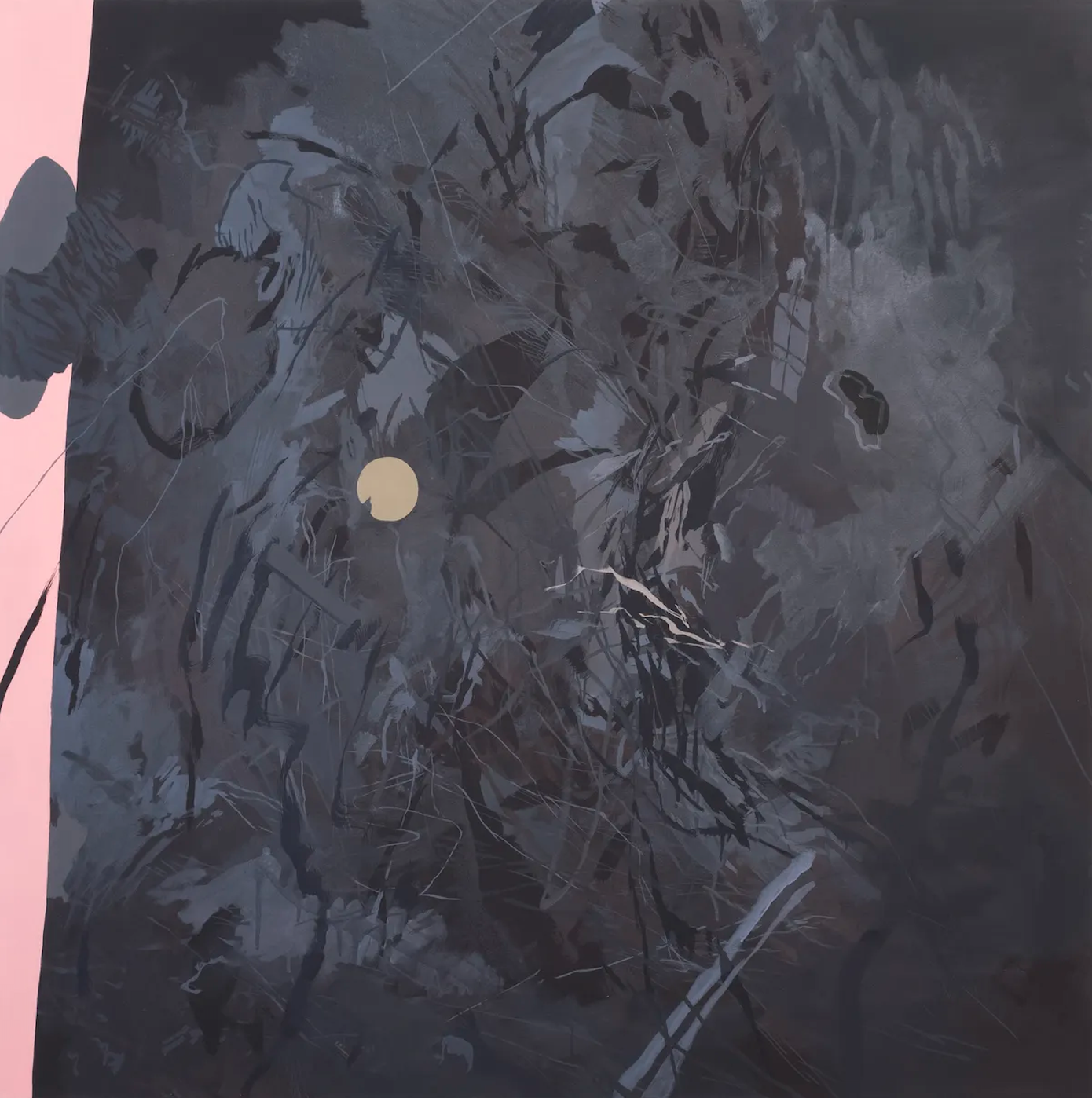
Aaron Collier, Landscape and Lamentation, 2017, flashe on canvas, 60 x 60 inches. Image courtesy of the artist and Other Plans.
A sliver of pink crashes through the side of an otherwise dark canvas. Veins and foliage cross the expanse. A charcoal pond is distorted by moonlight, profound in its contortion. Night hums from within the shadows, and something unseen echoes.
Aaron Collier's paintings reveal the process of concealment. His work layers abstracted forms over color fields, their craggy divisions reminiscent of coastlines, weather patterns, or rough bodies in motion. These forms read as fragments of an abstracted landscape, their outlines suggesting a presence beyond what the viewer can see. Like a silhouette, contours give the shape of something without completely revealing it. As I spent time with the work in Collier’s most recent show, Until the Day Breathes and the Shadows Flee at Other Plans, I found myself wanting to know what these shapes held, even as the flatness of the paint refused me access. I was caught in the contradiction of simplicity with depth, an effect made possible by Collier’s medium of choice.
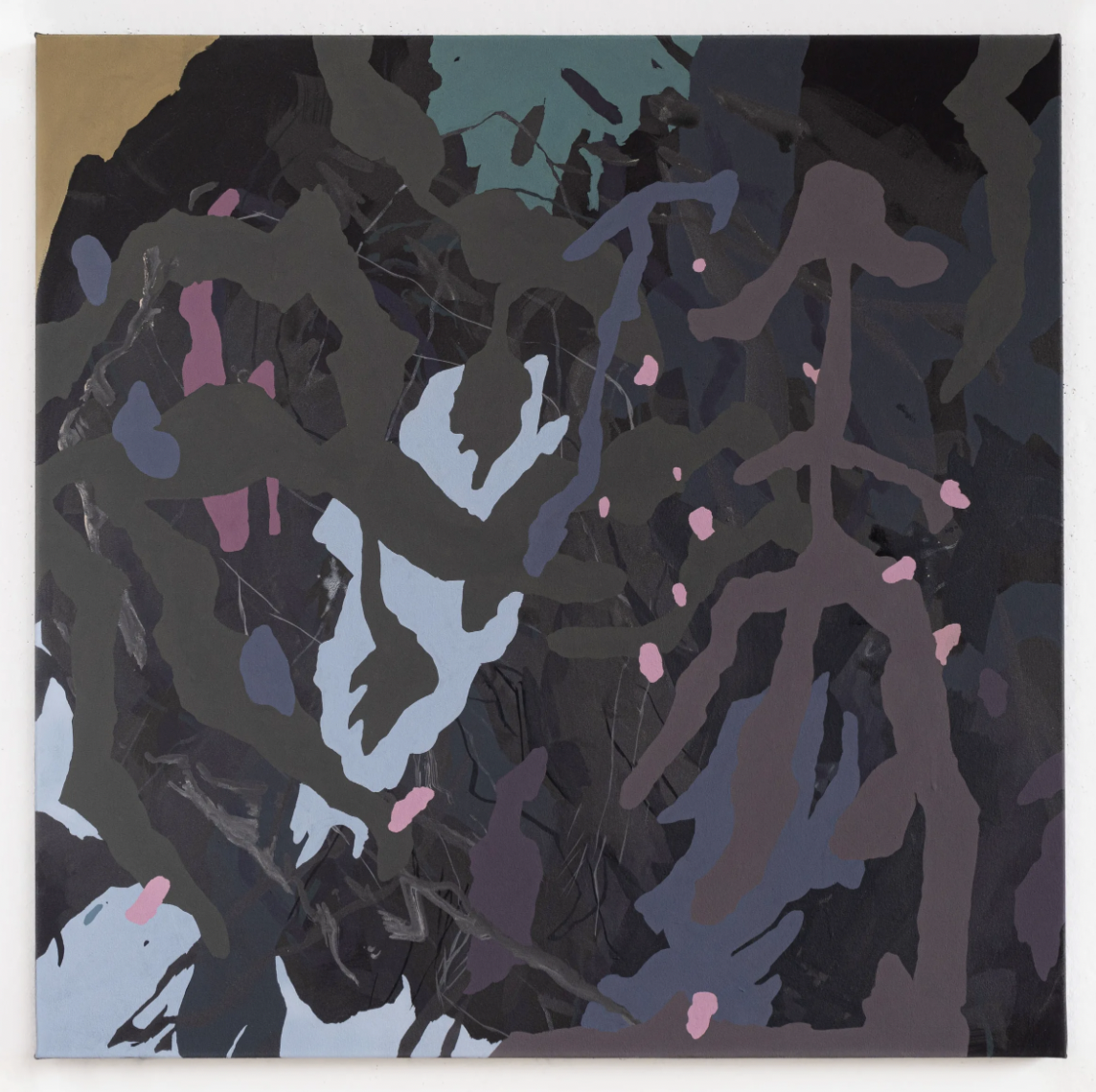
Aaron Collier, And So For Nights We Waited, No. 2, 2024, flashe on canvas, 36 x 36 inches. Image courtesy of the artist and Other Plans.
Collier’s sizable canvases are coated in flashe, a matte vinyl paint developed for opera sets in the 1950s. The material later became a popular choice for artists like Victor Vasarely, who used the paint’s opacity and light absorbing qualities to heighten his optical illusions. Because flashe reflects almost no light, its surface seems to recede rather than sit on top of the canvas. In Collier’s work, this characteristic makes form feel deeper and more spatial than the flat, solid shapes might otherwise suggest.
After looking at his work for a while, I couldn’t shake the feeling that there was something hidden in the paint’s vastness. Eventually, I encountered a surprising disclosure as some of his shapes revealed themselves.
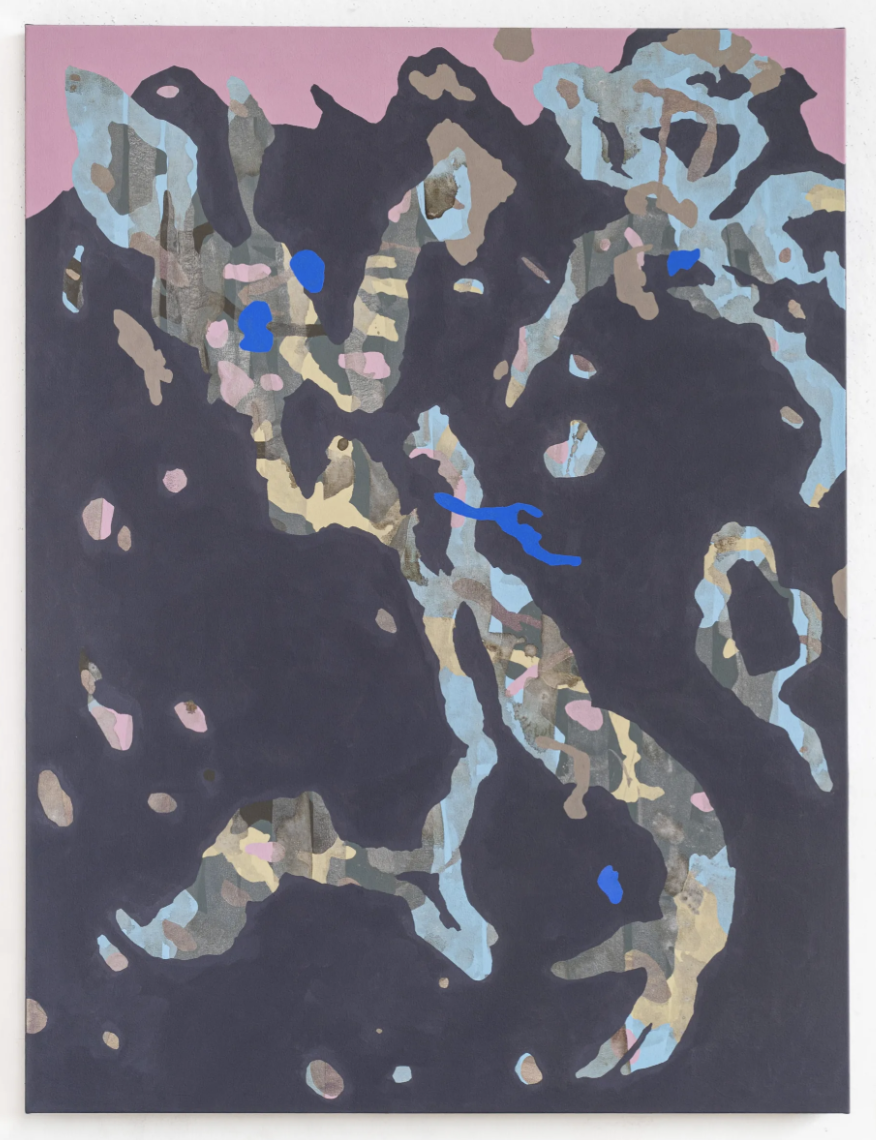
Aaron Collier, Slow to Extrapolate, 2026, flashe on canvas, 50 x 38 inches. Image courtesy of the artist and Other Plans.
Take for instance Slow to Extrapolate (2026). A rich black substrate lies just below a strip of blush horizon. Within a soil-like matrix are curvilinear forms, which appear as roots or tunnels. The paint filling them is a loose, layered wash of colors, which stands out against the flat black surroundings. This contrast makes the shapes look like entrances to another realm, as if a world sits behind them, beyond the dark. There is a feeling of hopefulness in this threshold. Looking at this piece, I found myself following the painting like a map, which led to a place inside myself where it is dark and fertile.
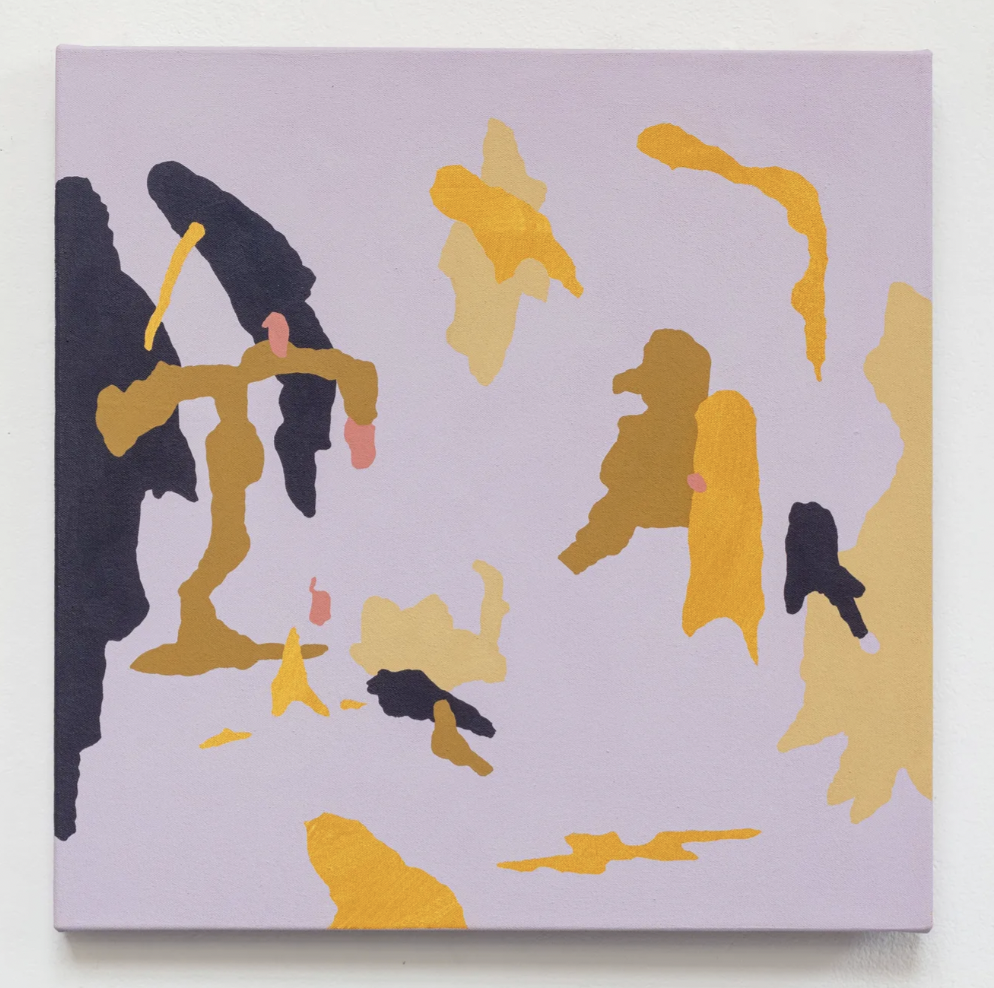
Aaron Collier, Touch of What Remains, 2022, flashe on canvas, 18 x 18 inches. Image courtesy of the artist and Other Plans.
Mapping and camouflage are opposing attempts to control what is seen. Traces of both can be felt in Collier’s work as surface and depth strain against each other. The matte paint presents itself as clearly two-dimensional, yet its contours suggest spatiality. Place is alluded to, while also being contradicted and withheld. The full depth, location, or individual is only implied. It's a new-genre camouflage, used not as a pattern to hide oneself in the landscape, but to create a landscape of things that are hidden. Unlike traditional camouflage, his paintings make obfuscation apparent. The obvious concealment initiates a search.
When the object of inquiry cannot be found within the bounds of canvas, where do we go? The darkness in Until the Day Breathes and the Shadows Flee does not represent an absence, but a dimly-lit entrance. What is hidden will remain so, but perhaps it is better to know what murky corner it has made its home, even if just for the night.
See Until the Day Breathes and the Shadows Flee at Other Plans in New Orleans through October 17, 2026.